Utility operations and capital programs involve decisions that directly impact public safety, infrastructure reliability, employees, contractors, and the communities we serve.
NACUP recognizes that ethical judgment is essential to effective utility leadership. Our standards emphasize integrity, accountability, and professional responsibility in complex, regulated, and high-stakes environments.
Ethics guide how utility professionals navigate risk, compliance, resource allocation, and leadership decisions, especially when trade-offs are difficult and consequences are real.
The NACUP Ethics & Professional Conduct framework establishes clear expectations for certification candidates and credential holders committed to advancing trust in the utility profession.
Ethics in Utility Leadership

Ethics & Professional Conduct
Purpose
The North American Council of Utility Professionals (NACUP) is committed to upholding the highest standards of ethical conduct, professional integrity, and accountability in all certification and governance activities.
This Ethics & Professional Conduct Policy establishes the principles and expectations that apply to all individuals associated with NACUP, including certification candidates, credential holders, volunteers, subject matter experts, and leadership.
Guiding Principles
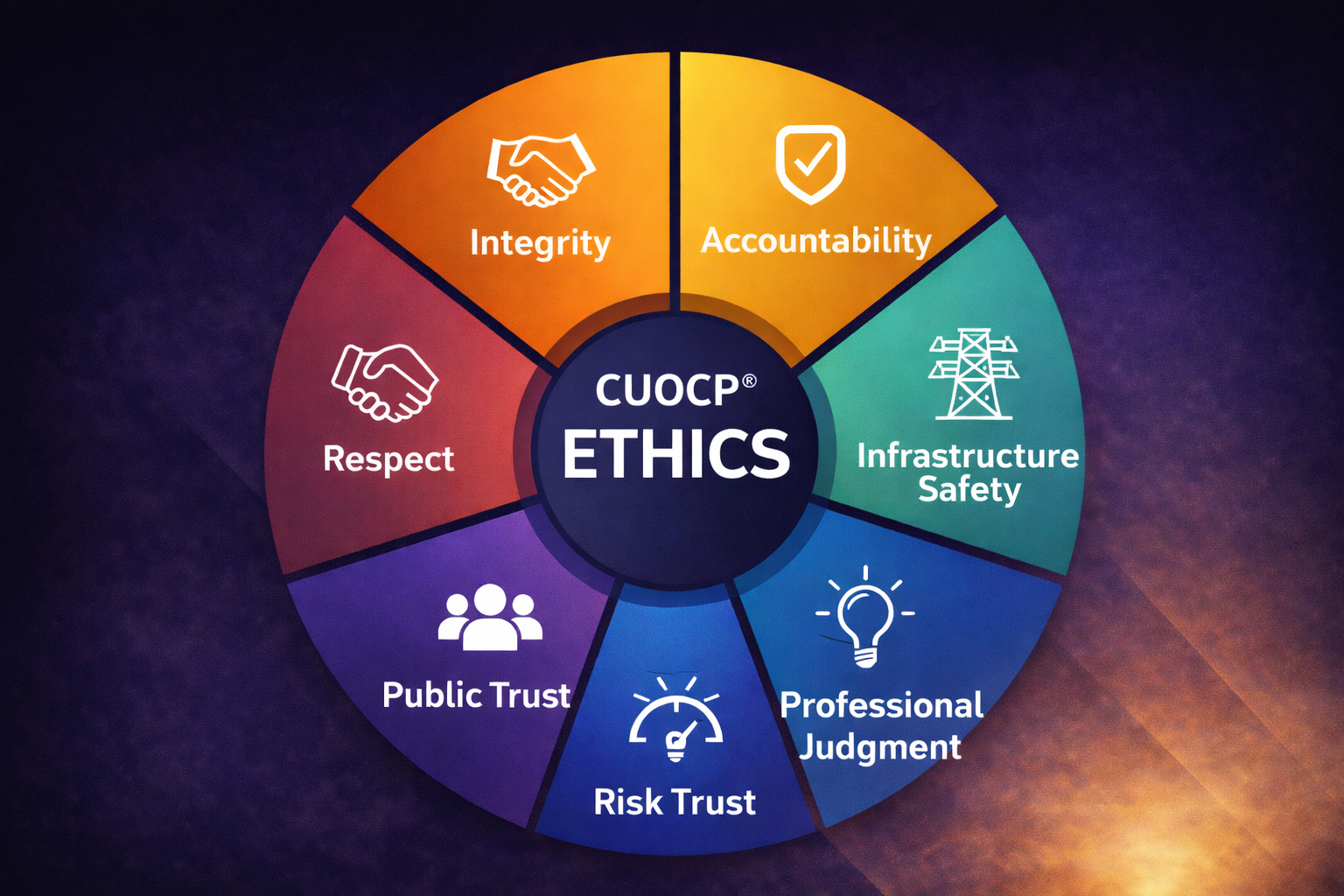
NACUP’s ethical framework is grounded in the responsibilities inherent to utility operations and capital leadership—roles that directly affect public safety, infrastructure reliability, and community trust.
All individuals associated with NACUP are expected to act with:
Integrity – Conducting professional activities honestly, responsibly, and transparently
Accountability – Accepting responsibility for decisions, actions, and professional behavior
Fairness – Treating others with impartiality and respect
Professional Judgment – Exercising sound decision-making consistent with industry standards
Public Trust – Recognizing the critical role utilities play in serving communities
Standards of Ethical Conduct
Individuals associated with NACUP certifications are expected to:
Act in a manner that reflects positively on the utility profession
Perform professional duties with competence and diligence
Avoid misrepresentation of credentials, qualifications, or experience
Respect confidentiality and sensitive information
Comply with applicable laws, regulations, and safety requirements
Maintain professionalism in all interactions with colleagues, employers, contractors, regulators, and the public
Integrity of Certification
To protect the credibility and fairness of NACUP certifications:
Examination content must not be shared, reproduced, or discussed
Candidates must complete examinations independently and without unauthorized assistance
Credential holders must not claim certification unless it is active and valid
Certification status must not be misused, exaggerated, or misrepresented
Any attempt to compromise exam integrity or certification credibility is considered a serious ethical violation.
Review and Enforcement
NACUP reserves the right to:
Investigate alleged ethical violations
Request information or clarification
Impose corrective actions, including warnings, suspension, revocation of certification, or permanent ineligibility
Disciplinary determinations are made at NACUP’s discretion and are final.
Certification Revocation
Certification may be suspended or revoked for:
Ethical misconduct
Misrepresentation of credentials
Breach of exam integrity
Violation of NACUP policies or standards
Conduct that materially undermines public trust
Revocation decisions may be reported in credential verification results.
Acknowledgment
Participation in NACUP certification programs constitutes acknowledgment and acceptance of this Ethics & Professional Conduct Policy.
Policy Updates
NACUP reserves the right to modify this policy at any time to reflect evolving professional standards, regulatory considerations, or governance needs.
Continued participation in NACUP programs constitutes acceptance of updated policies.
Contact Information
Questions regarding this policy or ethical concerns may be directed to: